Volunteer Event 8th November – Tree Cutting
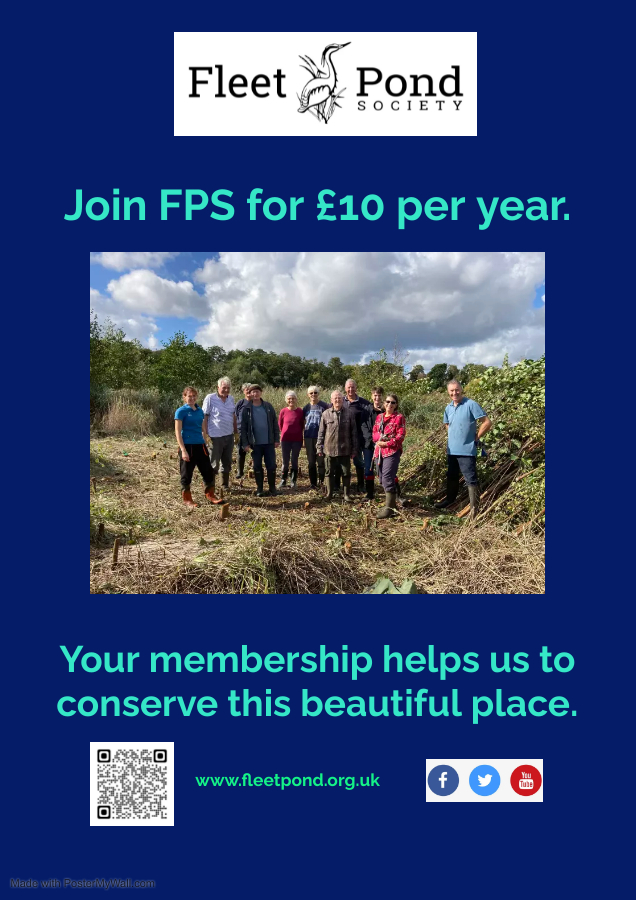
November 16, 2009In spite of the inclement weather of the preceding days, Sunday was fortunately quite reasonable for volunteering. There was a very good turnout for the time of year with over 15 present.
The task was to cut down the small trees and and scrub in Gelvert Marsh. It was fairly boggy but nothing that a pair of Wellington’s couldn’t handle.
As you can imagine, lots of sawing was required, both for cutting the trees down in the first place (top photo) as well as removing the major branches.
Some of the cut trees were put together to provide a habitat for small animals and insects (as seen in the front of the photo immediately below) and the rest were burnt (bottom photo). All in all, a good morning’s work!
Bat Boxes For The Pond
November 12, 2009FPS Photo Competition 2009: Tips For Sunrises And Sunsets
November 2, 2009This year’s FPS Photography Competition (deadline 31 December 2009) has three categories:
- Work or Play
- Sunrise or Sunset
- Birds
Here are some tips for taking stunning pictures of sunrises and sunsets (full details and a few more tips can be found here):
- Think Ahead – scope out good places and find out when the sun will set or rise
- Shoot At A Variety Of Focal Lengths – do you want a sweeping landscape shot or something zoomed in?
- Silhouettes As Focal Points – think of an attractive point of interest incorporating silhouettes
- Rule Of Thirds – it’s often good to place key elements off-centre
- Shoot At A Variety Of Exposures – abandon auto-mode and take some shots in aperture or shutter priority mode at different exposures
- Keep Shooting – until you’re sure it’s all over!
I hope you find these tips helpful and we’re looking forward to your creative submissions!
Picture credit: Vicki Jull
Volunteer Event 11th October – More Muddy Marshes!
October 29, 2009Baby Toad Found In The Leaf Litter
Colin Gray writes:
Fleet Pond volunteers returned to Fugelmere Marsh for the October task to extend the clearance of alder and sallow scrub. This large open marsh has become a small forest of regenerating scrub; some almost young trees now. It was a damp day so the volunteers were open to muddy water below and drizzling rain from above ensuring we were all very wet at the end of the day. Never the less a lot was achieved and the volunteers have opened a wide vista across the marsh to the reedbed beyond.
David Buckler, leader for the day, has a herbicide license and was able to treat a lot of the scrub stumps which will hopefully constrain further regeneration. Herbicide has usually been around 60% successful thus reducing manual labour in following seasons.
Photo credit: Michelle Salter (taken at the related volunteer event on Sunday 13 September).
Ranger’s Notebook – What To Look For In Autumn
October 16, 2009Joanna Lawrence, the Fleet Pond Ranger, writes:
As winter draws in there seems to still be plenty of wildlife to see around Fleet Pond. Many birds will be feeding themselves up for the winter by feasting on berries and seeds, and bats can still be seen flying around at dusk. Bats are very busy at this time of year as the males continue looking for females to mate with, while at the same time searching for suitable winter hibernation sites and building up their fat reserves for the winter by feeding on insects. One adult bat can eat about 3,000 insects in one night.
Southern Hawker Dragonfly
If you see any large dragonflies still flying this late in the year, they are Hawkers, the largest type of dragonfly in Britain which can be found flying until late October. Any seen at Fleet Pond are most likely to be Southern Hawkers, a very beautiful blue, green and black dragonfly, or maybe Brown Hawkers, which have distinctive brown wings. Common Darters, a smaller red dragonfly, may also be seen until early November.
Web Of The European Garden Spider
This photo of a spider’s web in the early morning dew was taken on Wood Lane Heath. The spider that makes these webs is the European Garden Spider, Araneus diadematus. You have probably seen many of these spiders in your garden at this time of year hanging upside-down in the centre of its web. These are known as the orb web spiders as they create this orb web in order to catch prey. Not all spiders however make this type of web. Some families of spider hunt visually and stalk their prey, and then there are numerous different types of spun webs with many families spinning their own variation.
Fly Agaric Fungus
Autumn is also a time of the year when the majority of our fungi are fruiting, like the poisonous species Fly Agaric. This species is easily recognisable due to its bright red colour and can be seen in many places around Fleet Pond. The one in the photo above was taken at Sandy Bay.
The part of the fungi that you can see is the fruiting body containing the spores, similar to the fruits and seeds produced by plants. The rest of the fungi is hidden underground as thin white threads known as Mycelium.
By breaking down dead organic material, fungi continue the cycle of nutrients through ecosystems. The majority of plants and trees on earth could not grow without the mycelium that inhabit their roots and supply them with essential nutrients. Look out for the multitude of fungi in bloom at this time of year.
(Please note that it is illegal to pick or remove fungi from Fleet Pond Local Nature Reserve.)
Wildlife Walk – What Have You Spotted At The Pond?
October 7, 2009Peter Hutchins, Basingstoke RSPB writes:
On Saturday 26th September 2009, I led a group of 22 wildlife watchers on a walk that covered the north-eastern /eastern side of the pond and the adjacent wood and heathland. A temperature in the high teens and the lack of wind, due primarily to the woodland cover, ensured a pleasant walk that lasted for a little over 1½ hours; the mid-afternoon sun being particularly obvious as the group lingered on the Boathouse jetty at the north-eastern corner of the pond towards the end of this time in the field.
For those of a listing nature, please find below the species that were recorded during the walk:
- Mute Swan Cygnus olor
- Canada Goose Branta canadensis
- Teal Anas crecca: three duck / eclipse drake were on the marsh below Sandhills Viewpoint
- Mallard Anas platyrhynchos
- Great Crested Grebe Podiceps cristatus: 15 were active about the pond
- Cormorant Phalacrocorax carbo: three were on wooden ‘platforms’ within the pond
- Grey Heron Ardea cinerea: one was heard
- Water Rail Rallus aquaticus: two were vocal in the marsh at Sandhills Viewpoint
- Moorhen Gallinula chloropus
- Coot Fulica atra
- Black-headed Gull Chroicocephalus ridibundus: three endlessly moved about the pond
- Herring Gull Larus argentatus: an adult was seen on the pond
- Woodpigeon Columba palumbus
- Green Woodpecker Picus viridis: at least two birds were seen with another being heard
- Great Spotted Woodpecker Dendrocopos major: two were seen, albeit briefly, with at least another two being heard
- Meadow Pipit Anthus pratensis: just two were noted moving overhead, both heard vocalising
- Wren Troglodytes troglodytes
- Robin Erithacus rubecula
- Blackbird Turdus merula
- Song Thrush Turdus philomelus
- Chiffchaff Phylloscopus collybita: a single bird was seen among a mixed feeding flock
- Goldcrest Regulus regulus
- Long-tailed Tit Aegithalos caudatus
- Blue Tit Cyanistes caeruleus
- Great Tit Parus major
- Coal Tit Periparus ater
- Treecreeper Certhia familiaris: an all too elusive bird was heard
- Jay Garrulus glandarius: two were seen, one lingering in the open
- Magpie Pica pica
- Jackdaw Corvus monedula
- Carrion Crow Corvus corone
- Starling Sturnus vulgaris
- Goldfinch Carduelis carduelis: one preening in trees by the jetty remained vocal throughout its’ prolonged stay
- Grey Squirrel Sciurus carolinensis: three were seen, all being fairly confiding
- Small Copper Lycaena phlaeas: one showed especially well as it sunned itself on low vegetation
- Small Tortoiseshell Aglais urticae: one was seen high in an Oak canopy
- Speckled Wood Pararge aegeria: at least four were seen, two showing very well as they rested on sunlit leaves / fencing
- Vapourer Orgyia antique: a male was seen on the wing
- Southern Hawker Aeshna cyanea: one of these was seen over the marsh at Sandhills Viewpoint and then at least a further two were by the jetty
- Common Darter Sympetrum striolatum: at least eight were on the wing, including one pair in a ‘mating wheel’
- Wood Ant Formica rufa: several (!) were seen as a nest was disturbed
- Common Wasp Vespa vulgaris: one was about the group at the end of the walk
Peter E. Hutchins
PS – Can you beat this? If you’ve made your own list, we’d love to hear from you!
Photo credits: Michelle Salter
Volunteer Event This Sunday, 11 October
October 7, 2009Colin Gray writes:
“I had a review of the Fugelmere Marsh this morning. Despite recent rain the area we worked on in September is still accessible with care. I suggest we carry on with clearing the central area so that we can use the fire site again which is fairly central to the work area.
More rain is expected later today and on Friday so I will try to have another look Saturday morning. In the event the water level rises higher, we can work on the woodland edge as this needs to be cut back further to improve the gradient of vegetation between the marsh and woodland.”
Further details on the volunteer event schedule and related matters can be found here and a description of the previous event is here.
Fleet Pond And Genealogy: The Military
October 2, 2009I recently came across an interesting discussion concerning tracking down someone’s great-grandfather who appears in the photo above.
If you have any information on the above photo, believed to be of the Manchester Regiment, please drop us a comment (see below this post), we’d be really fascinated to hear from you!
Regarding the role of the military at Fleet Pond, FPS Chairman Colin Gray writes:
“Fleet Pond was incorporated into the army training lands acquired in 1854 when the Aldershot Garrison was built. It stayed with the army until 1972 by which time Fleet town had grown right up to the boundary of the pond. I suspect that it became unacceptable to have artillery training so close to residential areas, so Fleet Pond was made redundant and sold to Fleet UDC in January 1973 for £10,000. Hart Council inherited it in 1974 when FUDC was disbanded and Hart DC founded.”
We’ve managed to find a couple of related photos (see below) and Colin writes:
“The two photos are postcards that Percy Vickery has in his 900 strong collection of postcards of Fleet and Church Crookham. There was nothing on them to indicate who the regiment was but I know that the Royal Engineers spent a lot of time exercising at Fleet Pond over the years. They built the larger islands and at one time installed a steel bridge which spanned the pond from east to west. Sadly none of that remains today!”
Volunteer Event 13th September – Muddy Marshes!
September 26, 2009Michelle Salter writes:
After a break in July and August, we started off the new season of conservation volunteer events in muddy style. We headed over to Fugelmere Marsh to start removing some of the regenerating scrub and saplings.
Accessing the marsh is fairly precarious – tread carefully or you can find yourself sinking into the boggy depths! Armed with saws and loppers, we made our way to the centre of the marsh and cleared a wide area of the invasive scrub and removed some trees from the woodland edge to enhance the wetland habitat.
This is a typical task for the volunteers at this time of year, and over the next couple of months you can expect to find us at Fugelmere, Gelvert or North East Marsh. Wellies are a necessity (the Society has a plentiful supply if you feel like joining us!) and, should water levels become too high, we will switch to other jobs, such as clearing birch from the Dry Heath or bamboo from Brookly Wood.
Photo credits: Michelle Salter

Posted by David Pottinger 


Posted by David Pottinger